How AI Is Personalizing Video Recommendations and Content Discovery
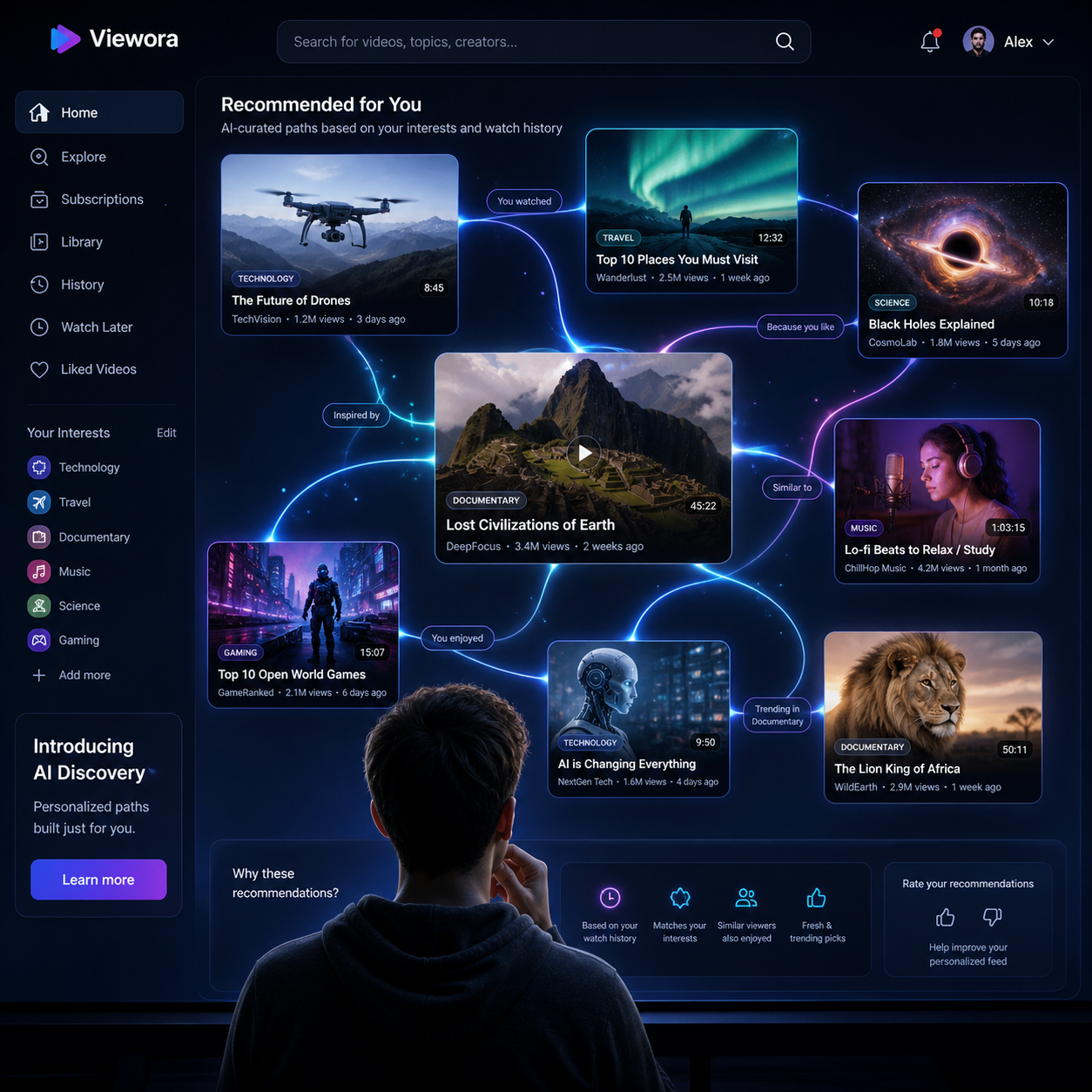
Video platforms contain more content than any single viewer could reasonably browse. Artificial intelligence helps solve that discovery problem by learning from viewing behavior, understanding video topics, and ranking content that may be relevant to each person. The result is a changing mix of familiar creators, related subjects, and new videos selected for an individual viewer.
What AI-Powered Video Personalization Means
AI-powered video personalization uses artificial intelligence and machine learning to tailor recommendations, search results, feeds, and playlists to an individual viewer. Instead of showing every user the same content, a platform estimates which videos are most useful, interesting, or timely for each person.
A recommendation algorithm does this by combining information about the viewer with information about the content. A person who watches several beginner photography videos may see camera reviews, editing tutorials, travel photography, or creators with similar audiences. Someone else using the same platform may receive completely different suggestions because their viewing history and interests differ.
Personalization supports video discovery in two ways. It helps viewers return to subjects they already enjoy, and it creates paths toward content they might not have found through a basic keyword search. That can introduce new formats, smaller creators, older videos, and topics adjacent to a viewer’s established interests.
The system is predictive rather than certain. A recommendation represents a probability that a viewer may value a video, not a guarantee that the prediction is correct.
The Signals AI Uses to Understand Viewer Preferences
AI understands viewer preferences by combining explicit feedback with passive user behavior signals, such as viewing history, watch time, searches, skips, subscriptions, and content interactions. Each signal provides a different clue about relevance.
- Viewing history: Previously watched videos reveal recurring topics, formats, languages, creators, and viewing patterns.
- Watch time: Completing most of a video can indicate stronger interest than clicking and leaving after a few seconds, although length and context also matter.
- Searches: Search queries show current intent, which may differ from a viewer’s long-term interests.
- Likes, dislikes, saves, and shares: These actions provide more direct feedback about perceived value.
- Skips and early exits: Quickly ignoring a recommendation can reduce the likelihood of seeing similar content, especially when the pattern repeats.
- Subscriptions and follows: Preferred creators and channels offer strong signals about ongoing interests.
- Device and time context: A platform may interpret viewing differently on a television, phone, or laptop, and at different times of day.
- Content interactions: Opening comments, adding a video to a playlist, or revisiting a clip can indicate engagement beyond a simple play.
AI also examines content metadata, including titles, descriptions, categories, captions, language, length, topics, and creator information. The system can therefore connect a viewer’s behavior with the characteristics of videos they watched, even when the viewer has never searched for the exact subject.
These signals are interpreted together. Watching one cooking video does not permanently define a viewer as a food enthusiast. Repeated behavior across several sessions usually provides a stronger basis for personalization.
How Recommendation Algorithms Match Viewers With Content
Recommendation algorithms match viewers with content by comparing patterns in user behavior and video characteristics, then ranking likely candidates for a specific viewing context. The process is complex behind the scenes, but the basic logic is understandable.
First, machine learning identifies relationships between viewers, videos, and actions. If many viewers who enjoy one science channel also watch a particular engineering series, the algorithm may recognize a connection. This is one form of collaborative pattern analysis. It does not require every video to have the same keywords; shared behavior can reveal relationships that metadata alone misses.
Second, the system uses similarity modeling to compare content. Videos may be considered similar because they cover the same subject, use related language, attract overlapping audiences, or share a format such as interviews, tutorials, livestreams, or short explainers.
Third, candidate videos are ranked for the moment. Recent searches may matter more than older viewing history when someone is actively researching a topic. A viewer’s device, current session, language, and the availability of fresh content can also influence the order.
A simplified model looks like this: likely relevance equals the relationship between viewer interests, content characteristics, and current context, adjusted by feedback from earlier recommendations. Real systems use many more variables and safeguards, and their exact designs vary by platform.
Choosing sophisticated personalization improves relevance, but it also creates trade-offs. A model can overvalue familiar patterns, misread accidental clicks, or favor easily measurable interactions over quieter forms of satisfaction.
Personalization Across the Video Discovery Journey
AI personalization influences nearly every stage of video discovery, from the first home-feed impression to the next video, search page, playlist, or notification. Each surface uses related signals for a different purpose.
Home feeds and suggested videos
Home feeds often combine established interests with timely recommendations. Suggested videos may extend the current session by offering related topics, a continuation, or another creator whose audience overlaps with the viewer’s interests.
Search results
Personalized search can rank results according to both the query and the viewer’s context. Two people entering the same broad search may see different ordering because their prior interests, language, or interactions differ. Relevance still depends on the words in the query and the quality of available content.
Playlists, notifications, and emerging content
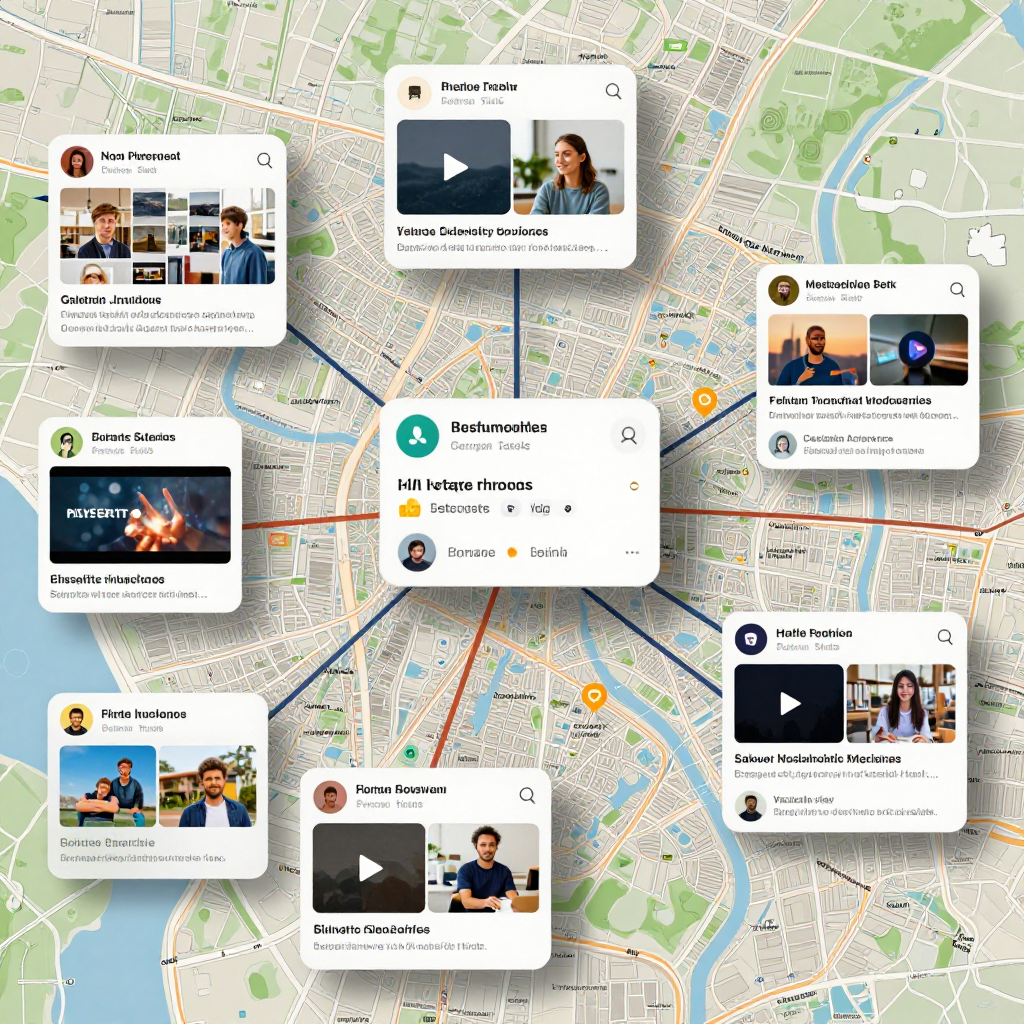
AI can organize videos into personalized playlists, select reminders from followed creators, and identify emerging content that resembles a viewer’s interests. This helps new creators reach relevant audiences, although early popularity signals can also amplify already visible content.
How Recommendations Improve Over Time
Recommendations improve over time through feedback loops: the platform suggests content, observes what happens next, and updates its estimate of the viewer’s preferences. Repeated actions gradually make the profile more responsive to current interests.
For example, a viewer may usually watch technology reviews but spend one week viewing home renovation tutorials. New searches, longer sessions, saves, and completed videos can signal a temporary interest or a lasting shift. A responsive system should adapt without treating one unusual session as a permanent identity.
Explicit feedback is often especially useful. Selecting options such as “not interested,” removing a video from a history list, disliking a recommendation, or following a preferred creator gives the model clearer information than an accidental click.
Good personalization also balances familiarity with exploration. If every recommendation duplicates past viewing, discovery becomes narrow and repetitive. If the system introduces too much unrelated material, relevance falls. A practical balance includes closely related videos, adjacent topics, and occasional new options that have a reasonable connection to the viewer’s interests.
Benefits and Challenges of AI-Driven Recommendations
AI-driven recommendations make large video libraries easier to navigate, but they also raise important questions about privacy, fairness, transparency, and control. The benefits are real, yet personalization is never perfectly neutral or accurate.
- Convenience: Viewers can find useful entertainment or education without constructing a detailed search query.
- Relevant discovery: Similarity modeling can surface niche topics, related formats, and creators outside a viewer’s usual routine.
- Better continuity: Playlists and suggested videos can help viewers follow a course, series, or developing story.
- Privacy concerns: Personalization depends on collecting and interpreting behavioral data, so viewers should understand available history and privacy controls.
- Bias and uneven visibility: Training data and popularity patterns can influence which creators or viewpoints receive exposure.
- Repetition and filter bubbles: Excessive optimization for familiar content may limit opposing perspectives or new subjects.
There is also a measurement problem. Watch time can suggest interest, but it may reflect background playback, autoplay, or a long video rather than genuine satisfaction. Likewise, a skip may mean poor timing rather than dislike of the topic. Responsible recommendation systems need multiple signals and clear user controls rather than relying on one metric.
Viewers who want broader discovery can deliberately search outside their normal topics, follow varied creators, and avoid treating the recommendation feed as a complete picture of available content.
How Viewers Can Shape Their Recommendations
Viewers can shape personalized recommendations by giving clear feedback, managing their viewing history, and actively exploring different subjects. Small actions repeated over several sessions usually have more influence than a single accidental click.
- Review your viewing history: Remove videos that do not represent your interests, especially accidental or background plays.
- Use explicit feedback: Mark irrelevant recommendations as unwanted and use dislike or “not interested” controls when available.
- Follow preferred creators: Subscriptions and follows help the platform identify reliable sources and topics.
- Search intentionally: Use precise queries when you need a specific subject, and broader searches when you want discovery.
- Explore beyond the feed: Browse categories, creator pages, playlists, and unfamiliar topics to diversify the signals the system receives.
- Check privacy settings: Understand how history, personalization, notifications, and data controls work on the platform.
A useful habit is to think of recommendations as a conversation. Your clicks, skips, searches, and feedback tell the system what to show next. If the feed becomes repetitive, change the input deliberately for a week rather than waiting for the algorithm to guess a new direction.
Frequently Asked Questions About AI Video Recommendations
How does AI know what videos I might like?
AI compares your viewing history, searches, watch time, likes, skips, subscriptions, and other content interactions with video metadata and patterns from similar viewers. It then ranks videos that appear relevant to your interests and current context.
Do watch time and skips affect video recommendations?
Yes. Watch time and completion can indicate interest, while repeated skips or early exits can reduce similar recommendations. These signals are imperfect, so platforms generally interpret them alongside searches, feedback, and content type.
Can users reset or change personalized recommendations?
Many video platforms provide controls for managing watch history, removing individual activities, changing notification preferences, and giving direct recommendation feedback. The exact options depend on the platform, so review its account and privacy settings.
How does AI help users discover new content?
AI identifies connections between a viewer’s interests and related creators, topics, formats, or emerging videos. This extends discovery beyond exact searches while still using relevance signals to avoid completely random suggestions.
Are personalized video recommendations always accurate?
No. Recommendation algorithms can misunderstand accidental clicks, changing interests, shared devices, or ambiguous content. Treat recommendations as suggestions, and use search, browsing tools, and feedback when the feed misses the mark.